Friday, September 18, 2009

30 Reasons Why It's Nice To Be A Dog


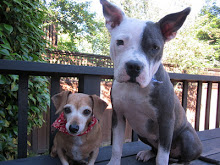
Greta & Dewey Present "30 Reasons Why It's Nice To Be A Dog"
-Author unknown

(1) No one expects you to take a bath every day.

(2) Your friends never expect you to pay for lunch, dinner, or anything else for that matter.

(3) When it's raining, you can lie around the house all day and never worry about being fired.

(4) If it itches, you can reach it (*Rebound Hounds edit: If you're a tripod and have trouble scratching your itch, your parents will help you).

(5) And, no matter what itches, no one is offended if you scratch it in public.

(6) It doesn't bother you if your favorite television show is a rerun.

(7) You can wear a fur coat and no one thinks you're insensitive.

(8) April 15th means nothing to you.

(9) People at drive-through windows never charge you for treats.

(10) Your friends don't think less of you for passing gas.

(11) A rawhide bone can entertain you for hours.

(12) No one gets mad if you fall asleep while they're talking.

(13) As an adult, it's okay if you haven't amounted to anything.

(14) The older you get, the more people respect you.

(15) You can sleep late every day.

(16) If you grow hair in weird places, no one notices.

(17) You never get in trouble for putting your head in a stranger's lap.

(18) There's no such thing as bad food.

(19) You don't have to worry about good table manners.

(20) Someone else combs your hair.

(21) People think you're normal if you stick your head out the window to feel the wind in your hair.

(22) You're always excited to see the same old people.

(23) Having big feet is considered an asset.

(24) If you gain weight, it's someone else's fault.

(25) Everything smells good to you.

(26) A garbage can is a fast-food stop.

(27) No one tells you to wipe your nose because it's wet.

(28) No matter where you live, you own the place.

(29) Your mate never complains because you whine.

(30) Puppy love can last.

Wednesday, September 16, 2009

Save Dogs' Lives - Become A Transport Volunteer!

You don't have to adopt a dog to save a life. For many homeless dogs, the primary barrier between an uncertain future and a loving family is simple geography. Rural areas and states with large numbers of puppy mills like Missouri and Pennsylvania typically have more dogs in need. For these pups to have a chance at being adopted, they often need to be transferred to shelters and rescue groups in other states.

This is where volunteer transport networks come in. By donating just a few gallons of gas and bit of time, you can help shepherd a dog to safety. Even though the destination may be hundreds of miles away, transports are broken into manageable legs. For instance, a recent Dachshund Rescue of North America transport from Albany, Georgia to Philadelphia was broken into 15 legs of about 70 miles each. Thanks to a dedicated team of Dachshund-loving drivers, five canine "passengers" - Angel, Charlie Prince, Trixie, Zip and Maggie Mae - were all united with loving forever families.

If you are interested in participating in dog transports, check out one of the links below or contact rescue groups and shelters in your area to see how you can help. It doesn't take much to give a deserving dog a new leash on life!

Transport Groups & Organizations (keep in mind that this is not a complete list - there are many more!)

Dogster Railroad (forum with people from all 50 states)www.dogster.com/forums/Dogster_Railroad

Hero’s Waggin Train
www.heroswaggintrain.com

Boxer Canine Underground Railroad
http://ladywind.com/rescue/boxercur.html

Baseji Underground Railroad
http://midtown.net/bur

Bulldogs' World Rescue Railroad
www.bulldogsworld.com/railroad.html

Chihuahua Rescue Transport (US & Canada)
www.chihuahua-rescue.com

Canadian Chihuahua Rescue and Transport
www.ccrt.net

Eskie Railroad (American Eskimo dogs)
www.heartbandits.com/Pages/Railroad.htm

Grayhound Underground Railroad
www.gemgreyhounds.org/gur.htm


Yahoo groups (again, this is not a complete list - there are more!)

Dachshund Rescue of North America
http://pets.groups.yahoo.com/group/DRNAexpress

TRUCK-N-PAWS
http://groups.yahoo.com/group/TRUCK-N-PAWS

Pet Transport Net
http://pets.groups.yahoo.com/group/PetTransportNet/

Dog Rescue Railroad
http://pets.groups.yahoo.com/group/Dog_Rescue_Railroad/

Rescue Transport
http://groups.yahoo.com/group/RescueTransport

All Breed Rescue
http://groups.yahoo.com/group/allbreedrescue

Biker Babe Transport
http://groups.yahoo.com/group/BikerBabeTransport

Dog Transport
http://groups.yahoo.com/group/DogTransport

Rescue Angels on Wheels
http://groups.yahoo.com/group/RescueAngelsonWheels

Illinois Animal Transporters
http://groups.yahoo.com/group/IllinoisAnimalTransporters

California Rescue RR
http://groups.yahoo.com/group/CaRescueRR

PacWest Dog Cooperative
http://groups.yahoo.com/group/PacWest-Dog-Cooperative

HUGS (Help US Get Safe)
http://groups.yahoo.com/group/Help

IMOM-Xpress
http://groups.yahoo.com/group/IMOM-xpress

Saturday, September 12, 2009

Photographer Melissa McDaniel Spotlights Deaf Dogs

Melissa McDaniel is a Philadelphia-based professional photographer with a passion for animal advocacy. She is known for her evocative portraits of shelter dogs and she donates a significant portion of her income to grassroots rescue groups.

Most recently, Melissa has been criss-crossing the country to photograph dogs big and small for her forthcoming books Rescued In America and Deaf Dogs. At least 30% of the proceeds will support animal rescue organizations and Melissa's goal is to sell enough copies to raise $300,000 or more.

For Melissa, the book projects are deeply personal - her own Border Collie/Lab mix, Sadie, was born deaf and surrendered to a shelter as a result. On her photo book projects website, Melissa explains how adopting Sadie motivated her to speak out for deaf dogs:

"...she was saved, but unfortunately, many deaf dogs aren't as lucky. In the U.S., thousands of deaf dogs are put to sleep each year simply because they are deaf. I wanted to bring awareness to this fact, to help dispel some myths that surround deaf dogs, and at the same time, promote the adoption of rescues."

Judging by the incredibly poignant photos on Melissa's blog, Deaf Dogs promises to be a phenomenal book. Copies can currently be pre-ordered at a 15% discount for $42.50. You can personally select the beneficiary of your purchase from a list of 16 shelters and rescue groups, too. I plan on ordering Deaf Dogs now to give at Christmas (hooray for advance planning!).

To hear more about Melissa McDaniel's experience living with a deaf dog, check out this excerpt from from a recent interview:

What challenges have you faced raising a deaf dog?
Not as many as you would think. I use hand signals with her. Dogs need to be able to read cues from others in the pack and so, are very visual animals and can learn hand signals quickly. Sadie picked up the command for "sit" in just a minute or two. She's very bright and has always been very easy to train.

Also, deaf dogs benefit from having a fenced in yard - at least my dog does because she needs a ton of exercise and really needs to run, so having a place where I can have her off-leash safely, to let her play with other dogs and play fetch, chase bugs - her favorite activity - has been extremely beneficial.

Having a deaf dog isn't for the lazy. If she is digging in the yard, or doing something else I don't want her to do, I need to walk over to her to get her attention, since yelling her name obviously wouldn't work. There are a few other minor differences, but in general, she's just like any other dog, and I'm hoping the deaf dog photo book will help show what great companions deaf dogs can be.

What misconceptions do people have about deaf dogs?
People believe deaf dogs aren't trainable. They believe they are aggressive. They believe they can't be a part of a normal family because they are easily startled. They believe they aren't worth saving. They believe they should be put down.

How many deaf dogs are euthanized?
The exact number isn't known, but it is believed to be in the thousands in the U.S. alone. Many dog associations advocate the culling of deaf dogs - the biggest group being the Dalmatian Club of America, which actively promotes the culling of deaf puppies.

As long as breeding practices that produce deaf dogs are allowed to continue, large numbers of deaf dogs will continue to be born. Many of those dogs, called "lethal whites," are born blind, too, or with severe sight problems.

Thursday, September 10, 2009

You Can't Keep A Good Dog Down


Introducing Chilli and Juliet, two extra special pooches who are available for adoption at the shelter where I work! At 11 years young, Chilli (top) is quite the little performer. He loves to be the center of attention and will gladly show off his repertoire of tricks. Don’t let his age fool you – Chilli is a spry fellow who learns very quickly. He is currently mastering the art of dancing on two legs in a circle! If you’re searching for a small dog with an oversize personality, Chilli is your man...

Juliet is a leggy beauty with a gentle air about her. She weighs in at just over 10 pounds and we estimate that she is around three years old. Juliet's gentle nature would make her an ideal canine companion for a family with young children. She has an adorable habit of burrowing into blankets and making cozy nests for herself. In fact, she is currently curled up on my couch right now, slumbering away peacefully.

Both of these delightful dogs share the same medical condition: luxating patellas. Although the name sounds frightful, this condition is common among small/toy breed dogs and it typically isn't very debilitating. When a dog is diagnosed with patellar luxation, it means that their kneecap (the patella) slides out of place, usually toward the inside of the leg. Luxating patella ranges from grade I (least severe) to grade IV (most severe). In grade I, the patella sometimes slips out of place but returns to its normal position on its own. In grade IV, the patella is constantly out of place and cannot be returned to its normal position.

Chilli has a very mild luxating patella in his right rear leg. To the untrained eye, it's barely noticeable. Juliet is more seriously affected - she has grade III luxating patellas in all her knees. Although she is doing well for now, she may need surgery in the future in order to stay comfortable and pain free. For a more comprehensive explanation, including a diagram of the canine knee, click here.

Regardless of their tricky, misbehaving patellas, each time I'm with Chilli and Juliet I'm reminded that you just can't keep a good dog down! Neither one knows that they have uncooperative kneecaps. Instead, they're just like shelter pooches everywhere - hopeful that they'll find a welcoming home sooner than later with a family to love them, flaws and all. If you think you might be that special someone for Chilli or Juliet, please drop me a line at reboundhounds@yahoo.com

Tuesday, September 8, 2009

Tripods Are Ready, Willing & Able

If there was ever any doubt that three-legged dogs can lead active, fulfilling lives, this video of Serena the tripod should prove otherwise!


Serena is a regular agility competitor. Her human, Amy Breton, has great insights to share about caring for a tripod dog. Here is a blog post she wrote last summer:

Three-Legged Pets Are Amazing! (Rules To Keeping Your Disabled Pet Able)

Serena, my dog, only has three legs. She didn’t always have three legs; but one day cancer took one of her legs from her. After her surgery I pictured what every pet owner fears…that my best friend wouldn’t have as good of a life as she did when she was four-legged.

One month later, my tripod made her comeback in agility as a three-legged dog. She stole the show and proved to every four-legged dog that she was a force to be reckoned with. Three years later, she has one champion title and continues to earn points towards a second title.

If your pet just recently experienced an amputation, or if you are facing such a decision right now, you should know that having a pet with three legs doesn’t mean they will have a poor quality of life. From my own experience, the human has a harder time with the amputation then the pet.

Most diseases or injuries that require a pet to have a leg amputation are painful. By removing the painful limb, the animal can start to heal. Most pets will be up and walking on three legs about 8-12 hours after surgery. Although I work in a veterinary clinic and have dealt with many amputees, the initial shock of seeing my own dog as a three-legged dog is something I will never forget. Once Serena was fully recovered from surgery, I followed some simple steps to ensure that she would be as happy as any “normal-abled” pet.

1. Keep your tripod a healthy weight. This is one of the most important things you must do as an owner. If your tripod is overweight, even by a couple of pounds, it will mean more stress on the remaining three limbs. Many owners want to over-indulge their tripods with food because they feel bad for them, but don’t forget your tripod thinks having three legs is normal! Obesity is a serious problem for many four-legged pets, but it is even a bigger problem if they have three legs.

How do you know if your pet is overweight and what can you do about it? Check out these websites:

www.petobesityprevention.com


vetmedicine.about.com
(search keyword: obesity)

www.peteducation.com (search keyword: obesity)

www.petplace.com (search keyword: obesity)

2. Once your tripod has recovered from surgery, start exercising! Be sure to talk to your veterinarian first to ask about what kind of physical activity and how much is appropriate for your pet. Tripods can still pounce, wrestle with their dog and cat friends and go for hikes in the woods. Too many owners think that their disabled pet isn’t allowed to exercise. This causes a decrease in muscle mass and makes it harder for these animals to get around.

3. Talk to your veterinarian about a formal physical therapy program. It’s important to build up muscle mass on the remaining three legs. If your dog was not an active dog prior to amputation, then it is very important that he becomes an active dog now. Physical therapy centers have trained individuals that use techniques and tools, such as underwater treadmills and exercise balls, to help keep your three-legged pet active.

4. Don’t overly baby your disabled pet. Immediately after surgery you can spoil your pet silly, but then you must take steps to make life as normal as it was prior to the amputation. Many owners will reinforce attention-seeking behaviors, causing the pet to act out for the owner’s attention. One example is a Labrador who, after an amputation, trained his owners to sleep on the floor with him. If they tried to sleep in a bed, he would start howling and crying until they came back to the floor. The owners had slept on an air mattress for over six months because they had overly spoiled their tripod!

5. Ask for help. Your pet isn’t the only tripod out there. It’s normal for your three-legged pet to be a little slower, but most everything they use to love doing they should be able to do. There are many joint supplements and pharmaceuticals available to help your pet be just as active as they were when they had four legs. Halo makes an all-natural hip and joint supplement that contains glucosamine and chondroitin, which builds collagen and helps maintain cartilage. If there’s something your pet use to enjoy, but seems to struggle with now, ask your veterinarian for advice. There are many support groups and tripod owners to help you!

It’s important to realize that an amputation doesn’t mean your pet will live a life of lying around doing nothing. On the contrary, most disabled pets go on to live very active lives. Just ask Faith. She is the famous two-legged dog that walks upright. Faith has led a very active life walking around on two legs. Check out her amazing pictures and video on her website:

www.faiththedog.net


For more information on amputations please check out:

www.petplace.com (search keyword: amputation)